 Archos Labs
AI Workflow Automation Breaks More Than It Fixes
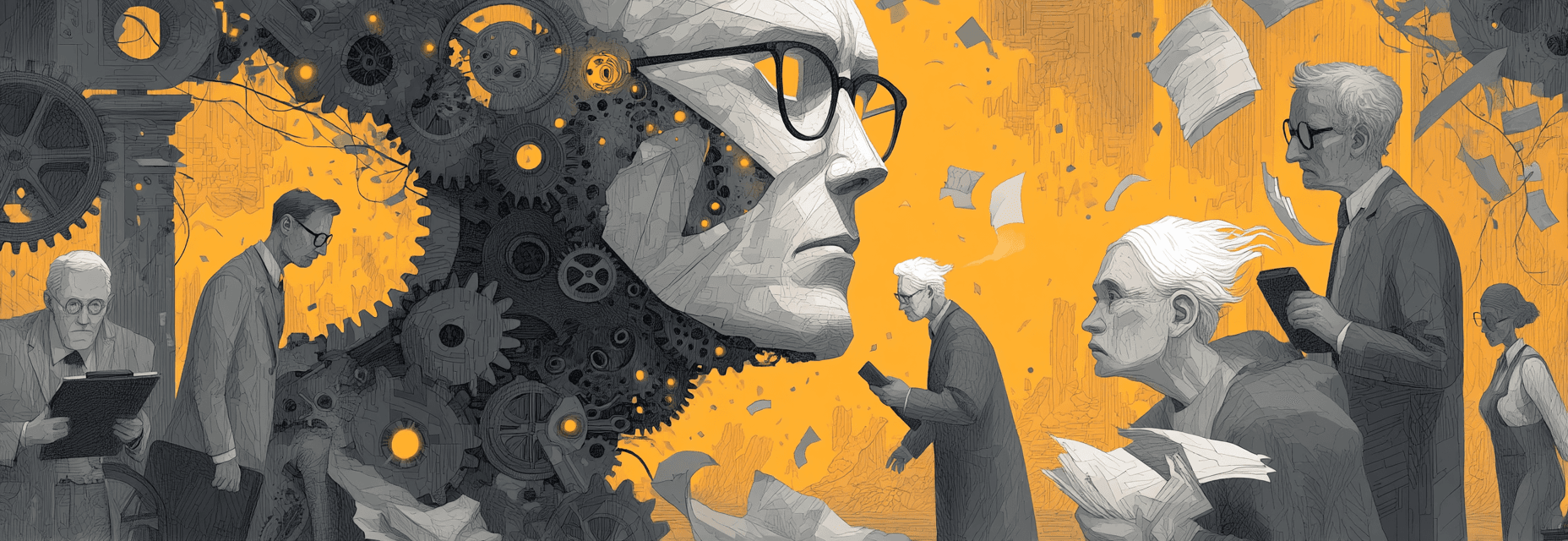
Most automation doesn’t save time. It multiplies mistakes.
You don’t notice it at first—until the new model pushes something through a broken pipe, and suddenly a dozen downstream teams are scrambling to patch what the workflow should’ve caught. That’s the real cost of pretending a better model won’t crack a fragile system.
Legacy Workflows Are Just Delayed Failures
The fantasy is clean: drop a shiny new AI model into your process, and let it optimize the mess. But workflows are held together by habit, duct tape, and domain tribalism. They're brittle. Worse—they're blind.
No matter how accurate your model is, if it feeds into a process that relies on manual review, shared inboxes, or 17-year-old exception logic buried in someone's VBA macro, you're not accelerating anything. You're just sending smarter inputs into a dumb pipe.
The Pressure Test Is the Deployment
The moment a model hits production, it becomes an agent of friction.
Not because it's wrong. Because it exposes what everyone quietly tolerated: delays, manual overrides, rules that never made sense but were too expensive to fix. AI workflow automation doesn’t just optimize—it reveals the rot.
And then people scramble. Not to fix the system, but to make the model more like the broken process it replaced. That’s the trap. You build a Ferrari engine and then tune it to match a lawnmower.
Example: Claims Automation and the Exception Avalanche
In a health insurer’s claims platform, an ML model was built to auto-approve low-risk reimbursements. Smart logic, high precision. The problem?
The back-end workflow had three routing layers, an outdated CRM dependency, and a compliance flagging rule from 2012 that no one remembered existed. The first time the model ran live, it processed 11,000 claims in a day.
That’s when the bottlenecks exploded.
Thousands of approvals hit queues that no longer had human handlers. CRM alerts failed silently. The compliance team panicked because the model ignored a legacy flag.
The model didn’t fail. The process did. The model simply revealed the cost of deferring structural redesign.
You’re Not Automating. You’re Redesigning.
The promise of AI workflow automation only holds up if you’re willing to rebuild the pipes. That means:
- Killing sacred process cows
- Revisiting exception logic built for a different century
- Admitting that some teams were built around inefficiency, not value
This isn’t about tuning hyperparameters. It’s about organizational courage. The model doesn’t need better explainability. The process needs a postmortem.
The Only Real KPI: System Resilience Under Pressure
Every new model is a load test. Not just for your data, but for your assumptions. Will it push cleanly through your workflow—or will it trigger a thousand hidden triggers nobody documented?
Here’s your measure of success: Can the system absorb better intelligence without falling apart? If not, you didn’t design a workflow. You inherited a trap.


Read next

AI as Strategy
Why AI Projects Fail at Week 7: It’s Not the Model. It’s the Org
AI pilots don't die because the model breaks. They die in Week 7, when the model works well enough to expose bad data, misaligned incentives, and the people…
4 min read

The Execution Layer
Applied AI Engineering Failure Modes and How to Prevent Them
AI projects don't fail because the model was wrong — they fail because the wiring around it was lazy. Here's what robust applied AI engineering actually…
4 min read

Human-Centered Transformation
AI Can’t Fix Broken Culture
Deploying AI into a broken culture doesn't fix the dysfunction — it amplifies it. Before you wire in the models, fix the incentives, the trust, and the…
4 min read