 Archos Labs
Strategy Isn't Top-Down. It's Sideways.
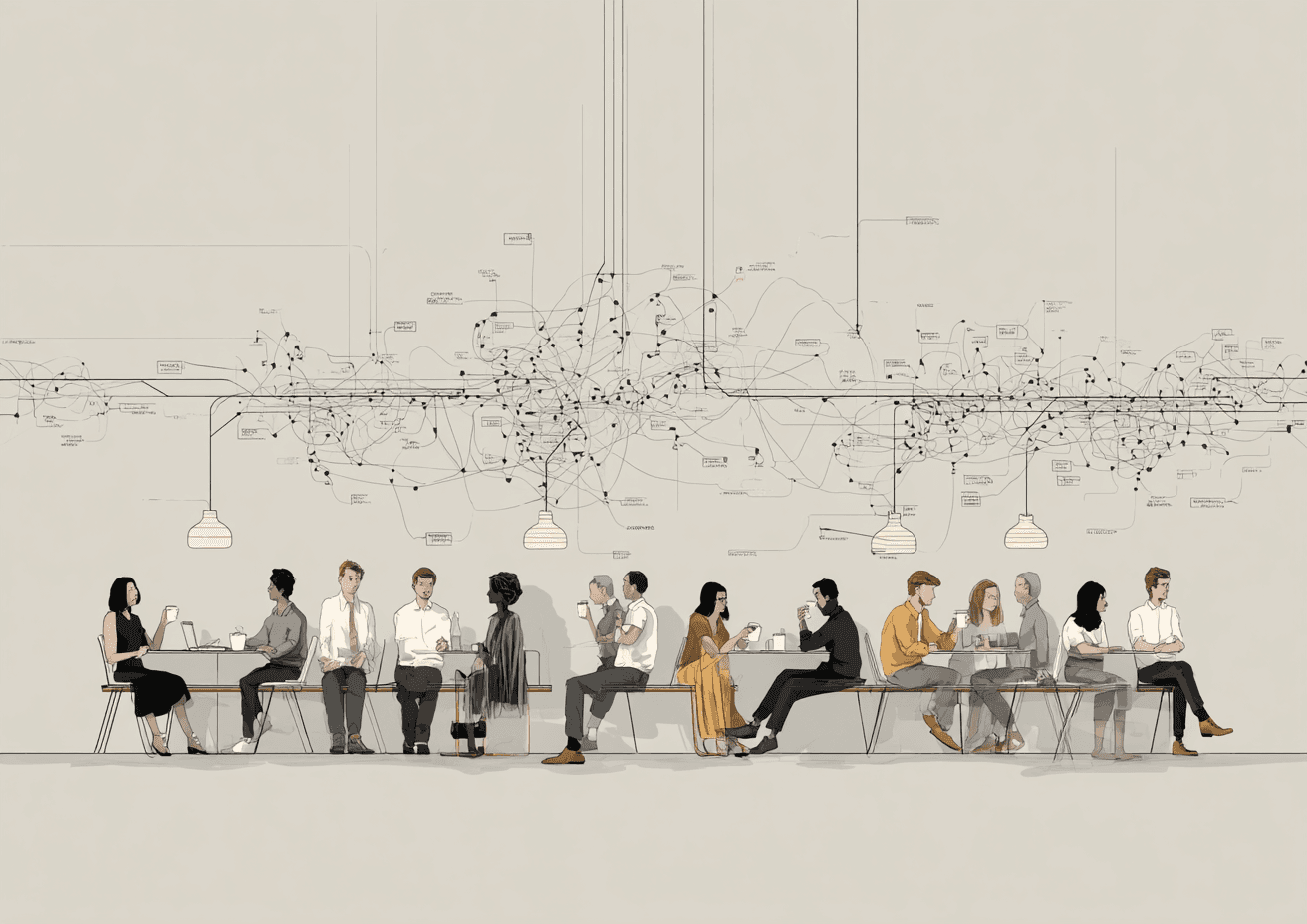
Strategy isn't top-down anymore. Real organizational change spreads sideways through informal networks. Learn how to identify and activate hidden influence levers.
Most executives think strategy flows down org charts like water through pipes. CEO decides, VPs align, managers execute, workers follow. Clean, logical, completely wrong.
Real change moves sideways. Through lunch conversations. Slack channels. The person everyone asks when they need to know how things really work. Not the org chart—the invisible network that actually runs your company.
The Org Chart Illusion
Every company has two structures. There's the official one hanging on the wall. Then there's the real one.
The real structure looks nothing like neat boxes and lines. It's messy. Sarah from accounting knows everyone because she's been there twelve years. The new developer somehow influences product decisions because the CTO respects their judgment. The receptionist shapes company culture more than HR because they greet everyone daily.
These informal networks determine whether your strategy succeeds or dies in a PowerPoint deck.
Finding Your Real Influencers
Forget titles. Look for patterns.
Who do people go to with problems? Not their manager—who they actually ask. Whose opinions spread fastest? When someone has a new idea, who do they tell first?
Watch information flow. Notice whose desk people stop at. Check which names appear most in email threads. See who gets invited to unofficial meetings.
One tech company mapped their real influence network using email data. The results shocked them. Their most influential employee was a mid-level engineer. Not because of technical skills—because everyone trusted their judgment about what would actually work.
The Coffee Machine Strategy
Traditional strategy cascades down. Sideways strategy spreads through conversations.
Picture strategy as a virus, not a waterfall. It needs hosts to spread. Those hosts are your informal influencers. They carry ideas through the organization faster than any official channel.
A retailer wanted to change their customer service approach. Instead of training sessions and memos, they started with five influential employees. Not managers—people others naturally listened to. These five understood the change deeply. More importantly, they believed in it.
Within three weeks, the new approach had spread to most stores. No mandates. No enforcement. People adopted it because someone they trusted said it worked.
Activating Sideways Change
Stop announcing. Start conversations.
Traditional approach: All-hands meeting. Big presentation. Email blast. Everyone nods. Nothing changes.
Sideways approach: Coffee with your informal influencers. Explain why this matters. Ask their opinion. Let them shape it. They'll spread it naturally—and it'll stick.
Make It Theirs
People support what they help create. Your informal influencers need to own the strategy, not just hear about it.
Give them problems, not solutions. "We need to reduce customer wait times. What would work here?" They'll develop approaches that fit reality. And they'll champion those approaches because they created them.
Create Collision Points
Sideways spread needs contact. Design spaces where informal networks naturally intersect.
Mixed project teams. Cross-department lunches. Shared workspaces. Online channels that break down silos. Make it easy for influence to flow between groups.
Why Sideways Wins
Top-down strategy assumes rationality. If people understand the logic, they'll change behaviour. But organisations aren't rational. They're human.
Humans trust peers more than bosses. We believe friends over memos. We change when people we respect change.
Sideways strategy works because it's human. It spreads through trust networks. It adapts to local conditions. It feels organic because it is.
The Strategy Question
Look at your last failed initiative. Did it die in the org chart or the coffee room?
Now think about your next strategic change. Will you announce it from above? Or will you seed it sideways, letting it spread through the networks that actually run your company?
The org chart is comforting. Clear lines. Defined authority. But real influence flows sideways. Master that flow, and you master change.


Read next

Human-Centered Transformation
Your Org Chart Isn't Your Culture Map: Hidden Networks Rule
Org charts show authority. They don't show who people actually listen to. Hidden influence networks determine whether transformation succeeds or dies in the…
4 min read

Human-Centered Transformation
Transformation Starts With Listening Not Executive Mandates
Most transformations fail not from resistance but because leadership never asked the people doing the work. Co-creation beats command-and-control every time …
3 min read

Human-Centered Transformation
The 5 Voices Missing from Your Transformation Team
Transformation teams stack senior leaders and consultants, then wonder why rollouts fail. The five voices they consistently exclude are the ones who know how…
4 min read