 Archos Labs
AI Is Scaling Dysfunction. Not Innovation

Generative AI can cement inefficiency into the core of your business. Audit and subtract before you automate.
Generative tools are making bad systems permanent.
AI was sold as a revolution. In most companies, it has become a photocopier with better grammar. The same broken workflows and flawed decisions now move faster, dressed in the glow of “innovation.”
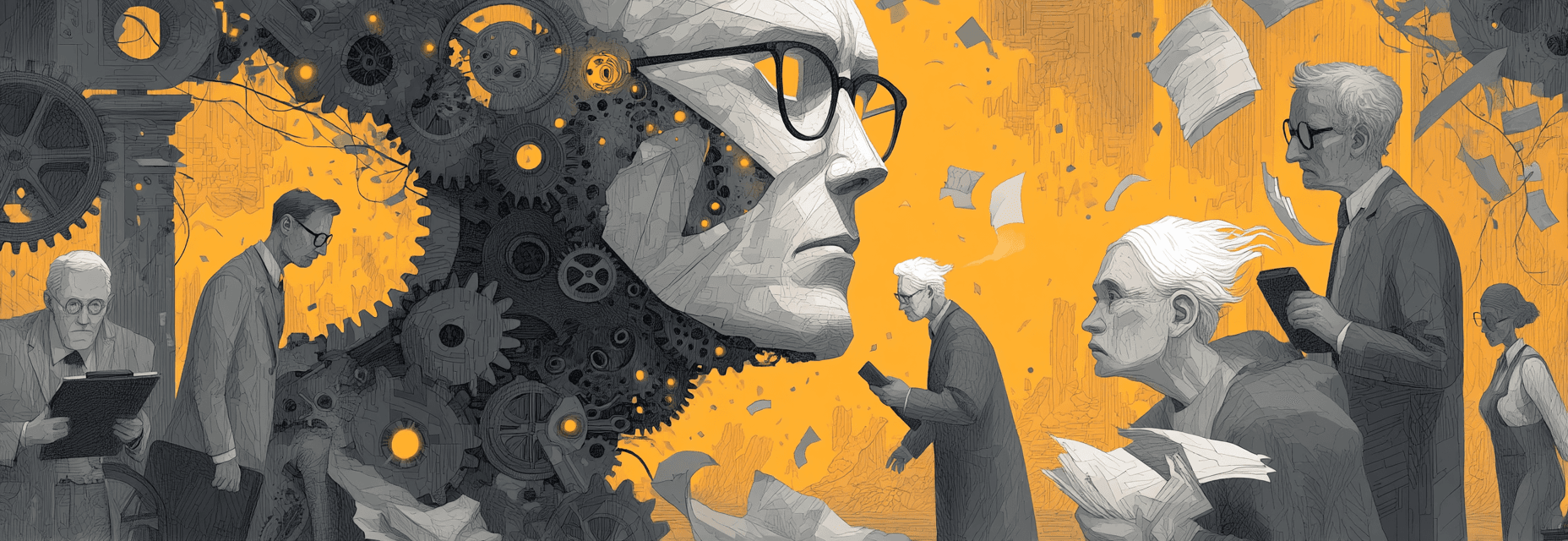
Generative tools are not neutral. They take the shape of whatever process you feed them. If that process is bloated, biased, or misaligned, the AI locks it in. The inefficiency becomes repeatable. The bias becomes reproducible. The cost of fixing it multiplies.
How Dysfunction Gets Automated
Every large company has workarounds and shadow processes. A report that is created to satisfy a single client and never retired. A sign-off loop built to patch a one-off compliance gap. These are the barnacles on the hull of the organisation.
When AI enters without scrutiny, it ingests these barnacles. The tool learns the workaround as if it were standard practice. The inefficiency becomes part of the system’s “truth” and is replicated at scale. In a matter of months, the workaround becomes policy because the AI’s output depends on it.
The Incentive Problem
Executives want visible wins. Vendors sell speed and scale. Teams are rewarded for adoption, not alignment.
Under these incentives, the first question is rarely “Should we be doing this at all?” It is “How fast can we make the AI do it?” That is how a 12-step approval process that should be cut to five steps ends up fully automated. The result is faster approvals — and no improvement in the underlying decision quality.
Innovation Requires Subtraction
True innovation often starts with removal. Stripping away unnecessary steps. Retiring outdated rules. Killing the reports nobody reads.
Skip the cleanup and you are just laying fresh asphalt over rot. It looks fine until the surface buckles, and by then the damage runs deeper than before. Once the AI is trained on those cracks, every future version of the process will have them baked in.
Two Paths in Practice
Two retailers adopt generative AI for product descriptions.
-
Company A feeds the AI all historical copy, including outdated templates and filler language. The tool produces consistent but lifeless descriptions, repeating old mistakes at scale. The brand voice erodes further with every product launch.
-
Company B audits and rewrites the best examples before training. They strip jargon, remove inconsistencies, and define a tone worth scaling. The AI produces on-brand copy that strengthens customer engagement.
Both companies “innovated” with AI. Only one improved.
How to Avoid Scaling Dysfunction
If you want AI to be a lever for progress instead of a cement truck for dysfunction:
-
Audit the process before automating it. Remove what does not serve the outcome.
-
Define the desired standard before training the model.
-
Build feedback loops that check outputs against intent, not just speed or volume.
-
Tie adoption metrics to quality and impact, not tool usage alone.
Generative tools can scale anything. That is the danger as much as the promise. If you do not fix the foundation first, you are not modernising. You are immortalising every flaw you already have.


Read next

Human-Centered Transformation
AI Can’t Fix Broken Culture
Deploying AI into a broken culture doesn't fix the dysfunction — it amplifies it. Before you wire in the models, fix the incentives, the trust, and the…
4 min read
Data as a Decision Infrastructure
AI Workflow Automation Breaks More Than It Fixes
Dropping a better model into a broken workflow doesn't accelerate anything — it exposes the rot. AI automation fails because the pipes are fragile, not because…
3 min read

AI as Strategy
The Myth of "Just Add AI"
AI doesn't fix broken processes — it accelerates them. Before you buy the tool, fix the fundamentals, define the outcome, and build the strategy that makes the…
3 min read