 Archos Labs
AI Will Expose Your Weakest Process First

AI implementation reveals broken processes instantly. Learn why AI exposes your weakest organizational links and what happens when you ignore the warning signs.
Companies think AI will hide their operational problems. They imagine intelligent systems smoothing over inefficiencies, automating away dysfunction. They're wrong.
AI is like a stress test for your organization. Apply pressure, and the weakest point breaks first. Always.
The breaks are spectacular. And they happen exactly where your processes are already failing, just faster and more visibly than before.
The Amplification Effect
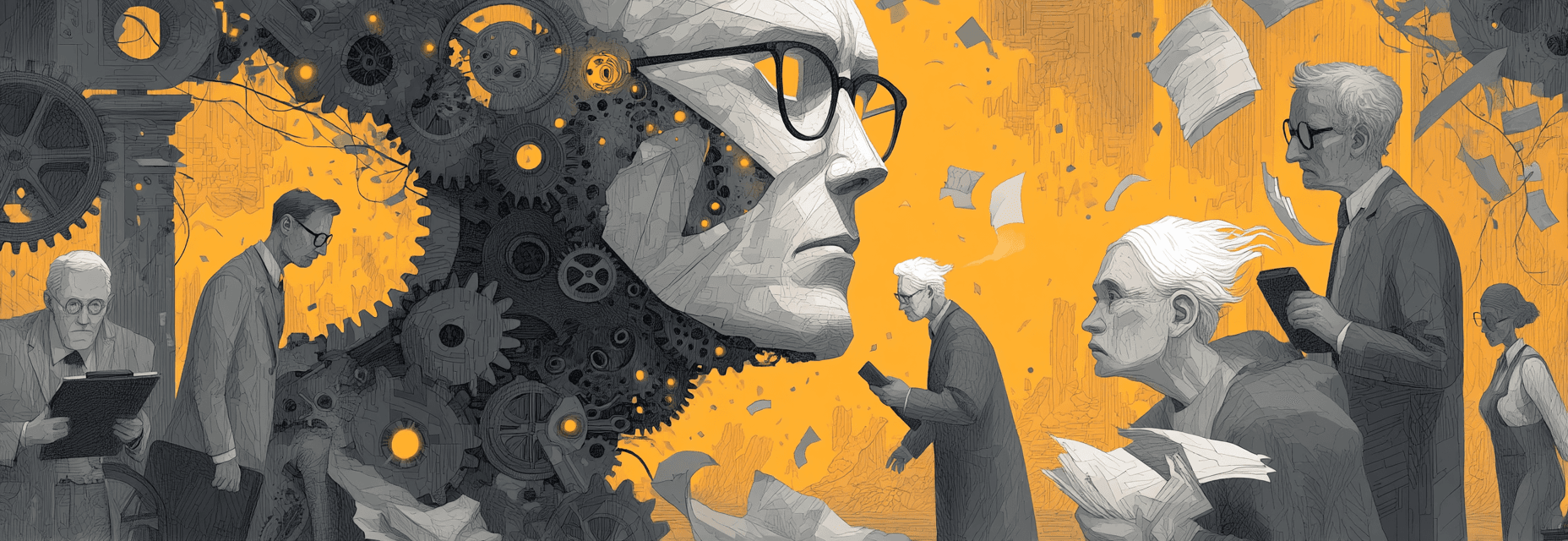
Bad processes are like cracks in glass. They might hold for years under normal pressure. Add AI, and they shatter.
Take a company with unclear approval chains. Documents bounce between departments. Nobody knows who signs what. It works, slowly, because humans navigate the confusion through relationships and workarounds.
Now add AI to "streamline approvals." The AI can't navigate politics. It can't read between lines. It follows the stated process, which never matched reality. Suddenly, everything stops. The AI reveals what everyone pretended not to know: your approval process never actually worked.
This pattern repeats everywhere AI touches weakness. Bad data quality becomes catastrophic when AI makes decisions from it. Poor communication breaks completely when AI tries to automate it. Unclear objectives become impossible when AI needs specific goals.
The First Crack
Watch where AI fails first in any organization. That's your weakest process. Not your most complex or your oldest—your weakest.
A retailer implements AI for inventory management. Where does it break? Not in the warehouse systems. Not in the prediction algorithms. It breaks where store managers have been fudging numbers for years to look good. The AI surfaces the fiction.
A bank deploys AI for loan approvals. The technology works perfectly. But it reveals that different branches have been interpreting policies differently for decades. What seemed like flexibility was actually inconsistency. The AI can't work with "sometimes we do this, sometimes we do that."
The Uncomfortable Mirror
AI holds up a mirror to your organization. Most companies don't like what they see.
That "entrepreneurial spirit" you celebrate? AI sees chaos. That "flexible approach" to customer service? AI sees no approach at all. That "institutional knowledge" in senior employees' heads? AI sees critical information hiding from the rest of the organization.
Leaders often blame the AI when it exposes these problems. "The technology doesn't understand our business." "AI can't capture our nuanced approach." "We need AI that works with how we operate."
No. You need operations that actually work.
The Hidden Gift
Here's what smart companies realize: AI failure is valuable diagnostic data. When AI breaks your weakest process, it's showing you exactly what to fix.
The inventory system that can't handle fudged numbers? Fix the incentives causing the fudging. The loan approval AI confused by inconsistent policies? Standardize the policies. The customer service AI that can't navigate your exceptions? Decide which exceptions are actually necessary.
Each AI failure points to a human system failure. Fix the human system, and the AI suddenly works. More importantly, everything else works better too.
Starting Strong
Before implementing AI, stress test your processes yourself. Where do things require "just knowing how things work"? Where do experienced employees make different decisions than new ones? Where do workarounds outnumber standard procedures?
Find these weak points before AI finds them for you. Because AI will find them, publicly and expensively.
The strongest organizations use AI as a catalyst for improvement, not a bandage for dysfunction. They know AI will expose their weaknesses. They're ready to fix what it reveals.
Which of your core processes would completely break if you had to explain every decision rule to a computer?


Read next
Data as a Decision Infrastructure
AI Workflow Automation Breaks More Than It Fixes
Dropping a better model into a broken workflow doesn't accelerate anything — it exposes the rot. AI automation fails because the pipes are fragile, not because…
3 min read

Human-Centered Transformation
AI Can’t Fix Broken Culture
Deploying AI into a broken culture doesn't fix the dysfunction — it amplifies it. Before you wire in the models, fix the incentives, the trust, and the…
4 min read

AI as Strategy
The Myth of "Just Add AI"
AI doesn't fix broken processes — it accelerates them. Before you buy the tool, fix the fundamentals, define the outcome, and build the strategy that makes the…
3 min read