 Archos Labs
Automation and Job Displacement: Who Gets Left Behind?
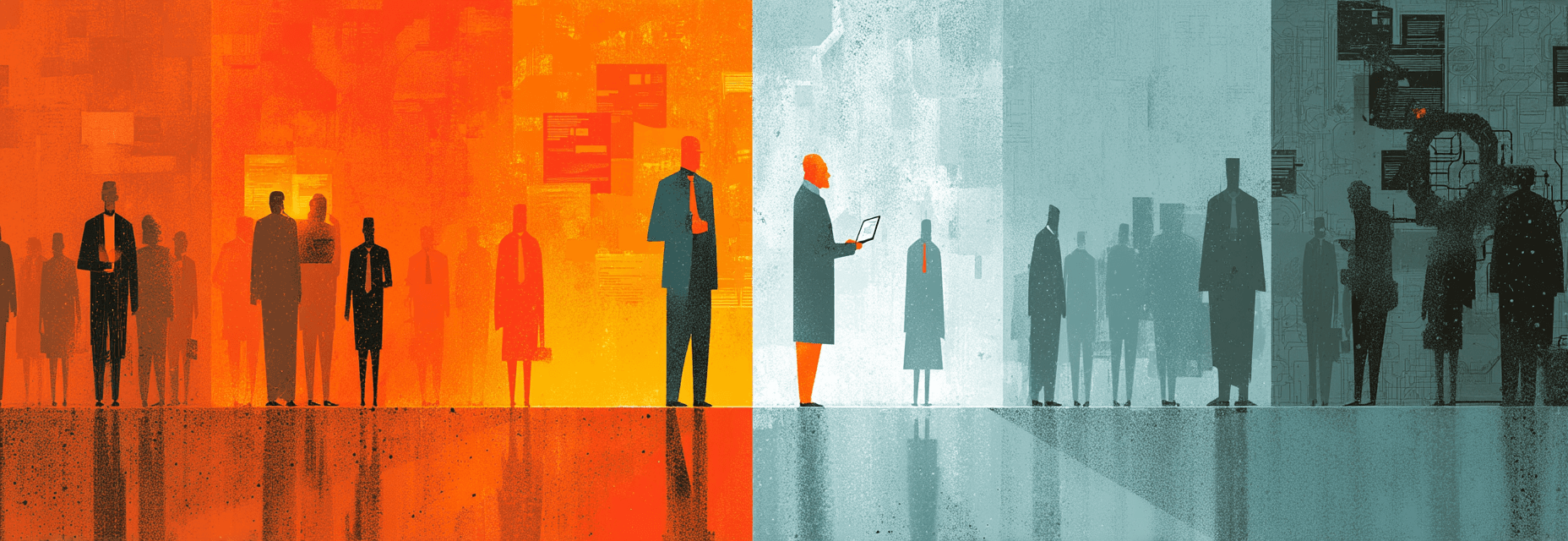
Automation and job displacement isn’t coming—it’s already here. The future doesn’t arrive equally, and the price most teams ignore is the damage to their own people.
She taught the onboarding course you still use. He built the messy spreadsheet the new platform just replaced. They trained your model. You trained your budget to forget them.
The Invisible Cost of Progress
No one talks about what happens after automation because it complicates the success story. You hit the milestones. You reduced cycle time. You got promoted.
But there’s a quieter outcome that doesn't show up in dashboards: cultural amputation. The people who held the old processes together—who fixed problems before they got logged—get reassigned, sidelined, or worse, erased.
Automation and job displacement isn’t a side effect. It’s a strategic choice hiding behind a technical decision.
What looks like optimization on paper often masks automation and job displacement in practice.
The cleanup crew always comes last. The ones who trained the system, documented the edge cases, and smoothed over brittle integrations? They don’t get thanked. They get sunsetted. By the time leadership declares success, the people who carried the rollout across the line are already looking for work.
Culture Isn’t What You Keep—It’s What You Discard
Most cultures don’t collapse when tech changes. They corrode slowly when the wrong people get left behind.
The ones who helped the system limp forward get treated like legacy code. Not fast enough. Not data-literate. Not strategic. Never mind they carried the emotional debt of your clients. Never mind they made the patchwork work.
You don’t just lose capability when they leave. You lose memory. Context. Quiet influence. And you create a new type of organizational orphan: someone who knows everything about how things worked—but no longer fits where they’re going.
The tragedy isn’t just who leaves. It’s who stays and no longer speaks.
After Automation: What Happens to the Displaced?
It’s easy to celebrate implementation day. New platform. New roles. New goals.
But the hard part starts after go-live. That’s when you discover:
- The AI works, but no one trusts the outputs.
- The process is lean, but the frontline team is burnt out.
- The data flows, but the judgment disappeared.
- The gaps closed technically, but widened emotionally.
And somewhere, someone who spent 20 years teaching the business how to think is now printing stock labels or coaching their own exit interview.
What Gets Automated Isn’t Always What Gets Replaced
Not everyone gets displaced because their job was automated. Sometimes, they disappear because the new system changed what the business values.
Before automation, success meant “keeps things moving.” After automation, success means “navigates systems, speaks API.”
Your best fixer becomes irrelevant because you didn’t reframe their skills—you re-scoped them out. Your best human translator got buried under a chatbot roadmap. Your most emotionally intelligent manager became “too analog.”
You didn’t automate the task. You deprecated the person.
That’s not transformation. That’s attrition in disguise.
You Can’t Automate Loyalty
Culture isn’t a metric. It’s a memory. People remember how you handled the transition. Who you celebrated. Who you forgot.
If the only people rewarded after automation are the ones who architected the system, you’ve already poisoned adoption. Because everyone else sees the pattern: when change hits, you only protect the architects—not the stewards.
That tension lives on. Quietly. In skipped retros. In brittle workarounds. In a new system no one truly owns, because the people who could have made it sing were told, in signals and silence, that they were obsolete.
Companies that treat automation and job displacement as growing pains often end up with shrinking trust.
Here’s the test: would your tenured employees say the system got better for them, or just without them?
Build Systems That Carry People Forward
Not every role can be saved. But every person deserves a path.
Re-skill early—before the fear sets in. Redesign roles—don’t just rename them. Reveal impact—don’t wait for resentment to tell the story. Repair the social tissue before it snaps.
If your automation strategy only optimizes outputs and doesn’t account for internal trust, you’re building a faster future on a rotting foundation.
The real transformation isn't what you automate. It’s who you still invite to lead once you do.


Read next
Human-Centered Transformation
Psychological Safety in Automation Starts Before Rollout
Automation resistance isn't about tools — it's about relevance. Build psychological safety before rollout or watch adoption stall, shadow processes multiply…
4 min read
Data as a Decision Infrastructure
AI Workflow Automation Breaks More Than It Fixes
Dropping a better model into a broken workflow doesn't accelerate anything — it exposes the rot. AI automation fails because the pipes are fragile, not because…
3 min read

Human-Centered Transformation
Don't Automate the Soul Out of Your Business
Automating the wrong things doesn't cut costs — it cuts what customers actually pay for. Here's how to draw the line between removing drudgery and gutting your…
4 min read